
William Carey and the shared work of mission in India
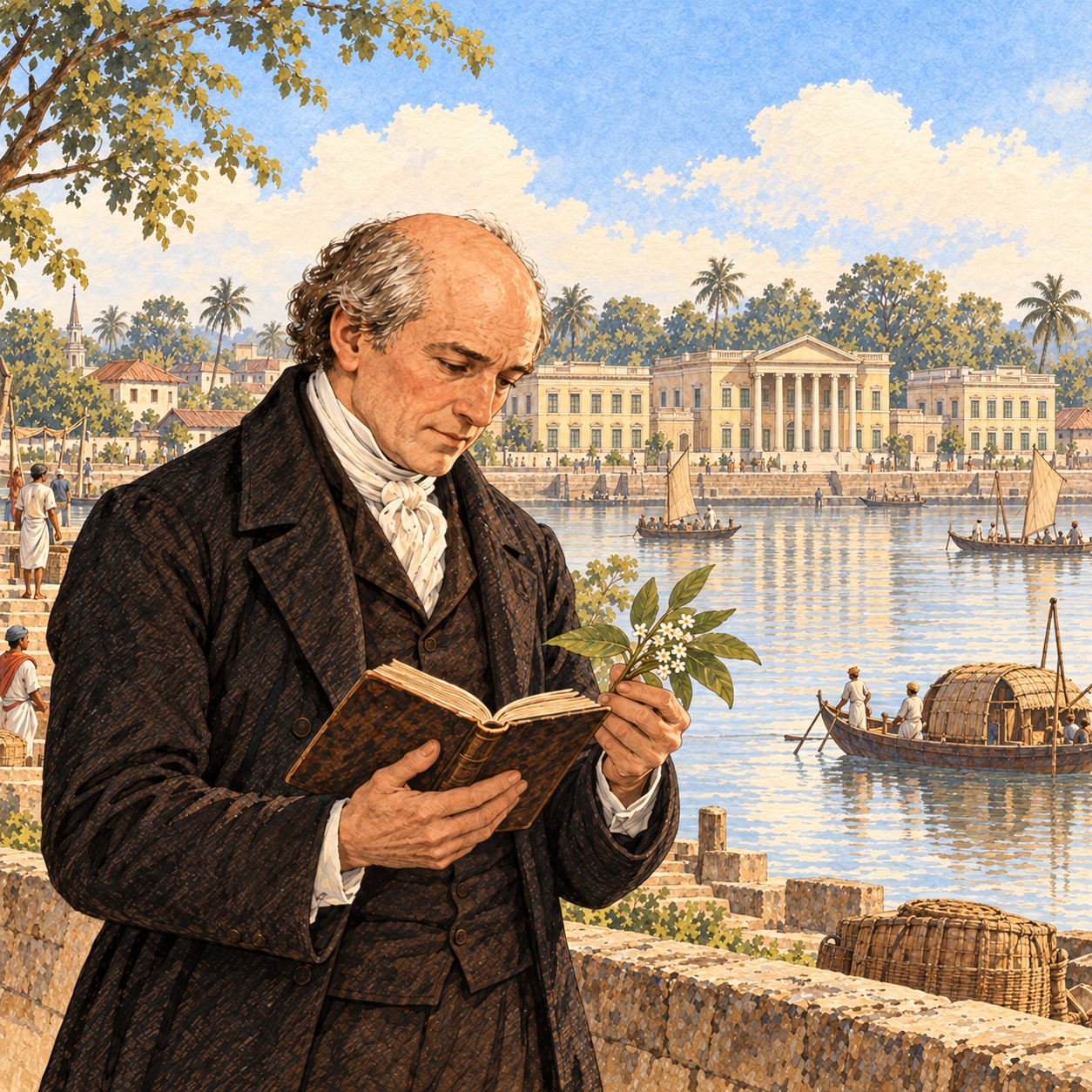
William Carey’s mission in India began with difficult years rather than immediate success. When he baptised Krishna Pal in the Hooghly River in December 1800, the occasion marked an important beginning for the Serampore mission. The Bengali believer would help make the Christian message known among his own people.[1]
Born in Northamptonshire in 1761, Carey worked as a shoemaker while developing a love of languages and geography. He became a Baptist pastor and argued that Christians should actively share the gospel overseas. His 1792 Enquiry helped give shape to the missionary society that sent him to Bengal the following year.[1,2]
Carey arrived in Calcutta, now Kolkata, in November 1793. Financial uncertainty and restrictions on missionary activity complicated his hopes. He worked managing an indigo plantation to support the family while he studied Bengali and pursued ministry. The cost was personal as well as practical: illness, bereavement and his wife Dorothy’s suffering belong within the history, alongside his achievements.[1,2]
In 1800, Carey moved to Serampore, then a Danish settlement, and worked with Joshua Marshman and William Ward. Their partnership supported translation, printing, education, and evangelism. Indian scholars contributed essential language expertise. Remembering them helps us understand how these publications were produced, rather than attributing this complex undertaking to a single foreign missionary.[2]
Krishna Pal’s baptism followed contact with the mission through treatment of an injured arm. Through conversation and instruction, his response developed, and his family also became involved. Later, he built a meeting place for worship. Such initiative shows the mission taking root through Indian participation. Serampore College, founded in 1818, extended the team’s commitment to education and training.[1,2]
Today, India’s Christian communities extend far beyond Carey’s Baptist legacy. USCIRF’s 2026 report describes Christians as about 2.3 percent of the population, a figure that covers Christian traditions collectively. Its account of 2025 records attacks against Christians and the strengthening of anti-conversion laws in several states. Conditions vary across this large and diverse nation; a national percentage cannot describe every community’s experience.[3]
Carey’s story invites us to value perseverance and partnership. His achievements depended on colleagues, Indian learning and local believers who embraced responsibility. As we pray for India, we can remember Christians seeking to worship freely, support their families and serve their neighbors. A faithful mission makes room for the people it hopes to serve. His example also encourages churches to invest in language learning and education that equip others for lasting service.
References
[1] George Smith, The Life of William Carey, Shoemaker and Missionary (first published London: John Murray, 1885), chapters I–VI and XIV. https://www.gutenberg.org/cache/epub/2056/pg2056-images.html
[2] A. Christopher Smith, “Carey, William,” in Biographical Dictionary of Christian Missions, edited by Gerald H. Anderson (New York: Macmillan Reference USA, 1998), p. 115. Authorized reprint: https://www.bu.edu/missiology/missionary-biography/c-d/carey-william-1761-1834/
[3] USCIRF, 2026 Annual Report (March 2026), “India,” pp. 28–29. https://www.uscirf.gov/sites/default/files/2026-03/USCIRF_2026_AR_3326_NEW.pdf
Artwork reference
Background informed by James Thompson, Topographical Plan of Serampore with Elevations and Views, 1827, H.M. the King’s Reference Library, Denmark. Within Carey’s 1800–1834 residence; portrait and riverside viewpoint are artistic reconstructions.
